
At a glance
Separate feedback about a particular deliverable from patterns in your process. Record recurring friction and make one specific change that you can evaluate on the next project.
1. Feedback Isn’t Just About the Work—It’s About the Process
Most freelancers associate client feedback with revisions. Did they like the design? Are they happy with the copy? Will they approve the final version?
But what clients say—or don’t say—also reflects how they feel about *your process.*
Were they confused during onboarding? Did they know when to give input? Did the project feel smooth or disjointed?
When you shift your lens from “What do they think about this deliverable?” to “What did their experience teach me about how I work?”, you unlock a new layer of growth. Because good client work isn’t just about output—it’s about how easy it was to get there.
2. Why Freelancers Avoid Feedback (And Why That’s a Mistake)
Let’s be honest: asking for feedback can feel vulnerable. What if they didn’t love the process? What if their input triggers imposter syndrome? What if they bring up something you didn’t even notice?
Many freelancers avoid asking because it feels personal. But skipping feedback means you miss out on golden insights that could save time, improve results, and help you build a better business.
Feedback isn’t an attack. It’s information. And when you approach it with curiosity instead of defensiveness, it becomes a powerful tool—not a threat.
3. The Difference Between One-Off Reactions and Useful Patterns
Not all feedback needs to become a policy.
One client may dislike something another loves. Some feedback is based on personality, brand style, or even communication preferences.
But when multiple clients say things like:
- “I wasn’t sure what to expect after I signed the proposal.”
- “I didn’t know when to give feedback, so I waited.”
- “I was confused about what was included.”
…that’s a pattern. And patterns point to process gaps.
The key is learning to separate emotionally charged responses (“They didn’t love the draft!”) from structural signals (“They were unclear about when revisions would happen.”)
The more often something comes up, the more likely it is that your process could use a tweak—not your talent.
4. How to Set Up a Lightweight Feedback Loop
You don’t need a formal survey or 20-question Google Form. In fact, most clients prefer simple, open-ended opportunities to share thoughts.
Try asking a few quick questions at project wrap-up, like:
- What part of the process felt easiest or clearest to you?
- Was there anything that felt confusing or unclear?
- Is there anything I could improve for future projects?
You can send this in an email, include it in your offboarding doc, or ask on a quick call. If a client doesn’t respond, that’s okay. You’re planting the seed that you care about their experience—and that alone builds trust.
5. Turning Insight Into Action: Small Tweaks, Big Impact
Once you’ve collected feedback, take a moment to reflect.
Ask yourself:
- What parts of this were one-off comments, and what showed up more than once?
- Is there anything I’ve been ignoring because I “make it work” every time?
- What small fix could solve a repeated problem?
Examples of process improvements based on feedback might include:
- Adding a welcome email with clear project phases
- Clarifying revision limits in your proposal
- Creating a simple form for collecting client assets
- Setting client expectations around response time or turnarounds
- Building a clearer offboarding process so clients know what happens after delivery
These don’t need to be dramatic. The best process changes are ones that save you from the same conversation again and again.
6. How ProjectBook.co Helps You Track Feedback Over Time
One of the best ways to improve your freelance process is to look at what your clients are actually experiencing.
With ProjectBook, you can:
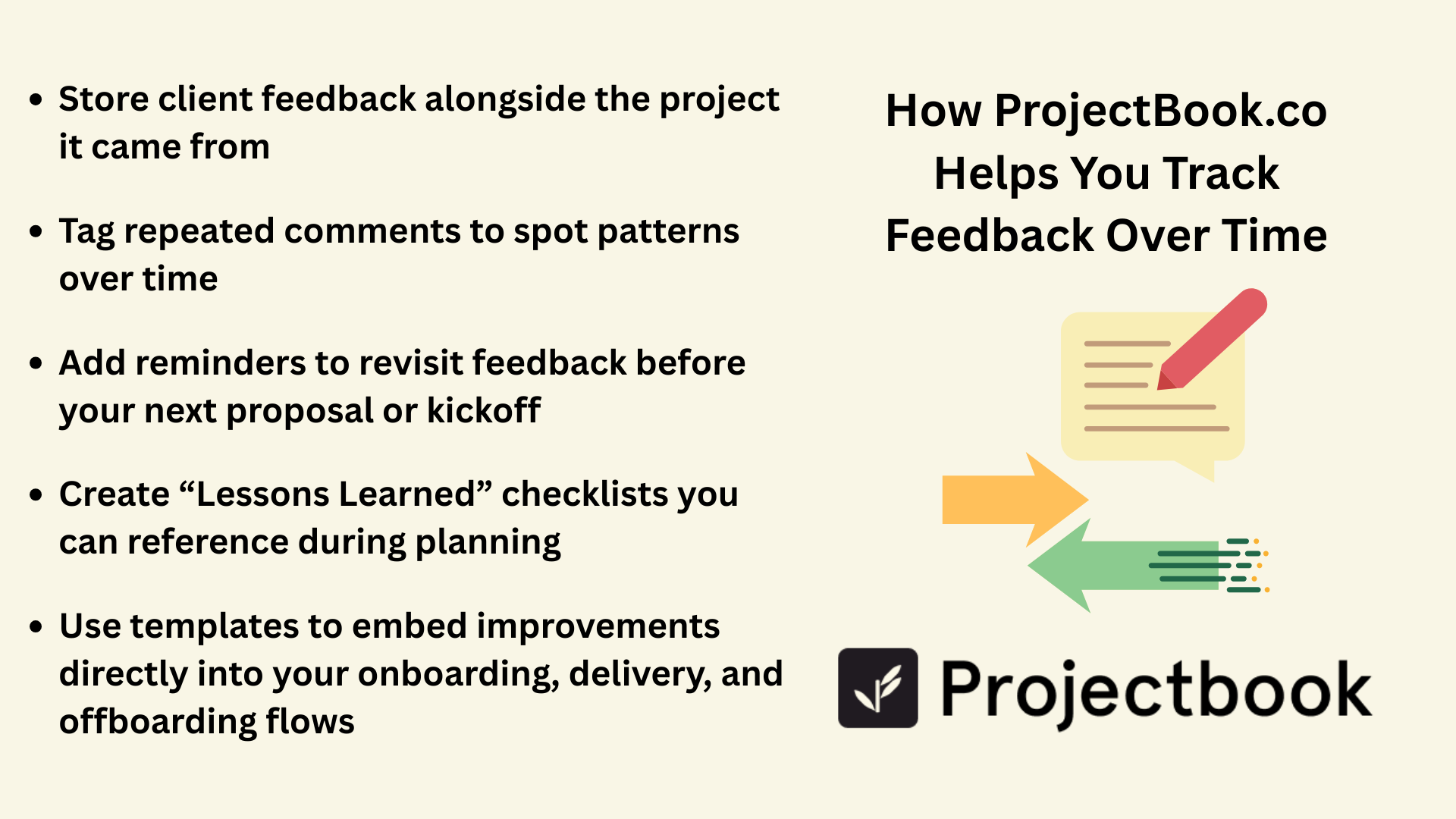
- Store client feedback alongside the project it came from
- Tag repeated comments to spot patterns over time
- Add reminders to revisit feedback before your next proposal or kickoff
- Create “Lessons Learned” checklists you can reference during planning
- Use templates to embed improvements directly into your onboarding, delivery, and offboarding flows
Instead of keeping feedback scattered in emails or forgetting it after the final invoice, you’ll have a calm, clear way to turn insight into action.
7. FAQ: Feedback, Process, and Growth as a Freelancer
What if I don’t get a lot of client feedback?
That’s normal! Many clients are busy or don’t know how to articulate feedback unless you ask directly. Build feedback prompts into your workflow and make them easy to answer.
Should I change my process after every project?
No. Make changes based on patterns, not panic. Let your process evolve gradually, not reactively.
How do I avoid taking feedback personally?
Separate yourself from your system. Feedback is about improving how you work together—not your worth or value.
Can I use feedback as part of my marketing?
Absolutely. Client testimonials that mention how smooth, clear, or professional your process felt are some of the strongest marketing you can get.
From ideas to a clearer week