Managing Client Expectations: Strategies for Clear Communication

At a glance
Agree on deliverables, timing, communication and review responsibilities before work starts. Revisit those expectations when the scope changes, and document decisions where both sides can find them.
Why Managing Expectations Is Critical in Freelancing
Client communication can make or break a project.
And often, it’s not about the work itself—it’s about how well expectations are managed along the way.
When you and your client are on the same page, the relationship feels effortless.
When you’re not, even great work can feel frustrating—for both sides.
That’s why setting and managing expectations isn’t just a “nice to have.” It’s a core part of your freelance business strategy.

What Happens When Expectations Aren’t Clear
When expectations are fuzzy, projects tend to:
- Go off-scope
- Go over time
- Go over budget
- Create unnecessary tension
- Leave clients confused or disappointed
Even if you’re delivering great work, if the client thought they were getting something different—or wasn’t prepared for your timeline, process, or communication style—it creates avoidable friction.
💡 Clear expectations = fewer awkward follow-ups, faster approvals, and smoother delivery.
When (and How) to Set Expectations
You should be setting expectations from the very first client touchpoint—and reinforcing them at every stage of the project.
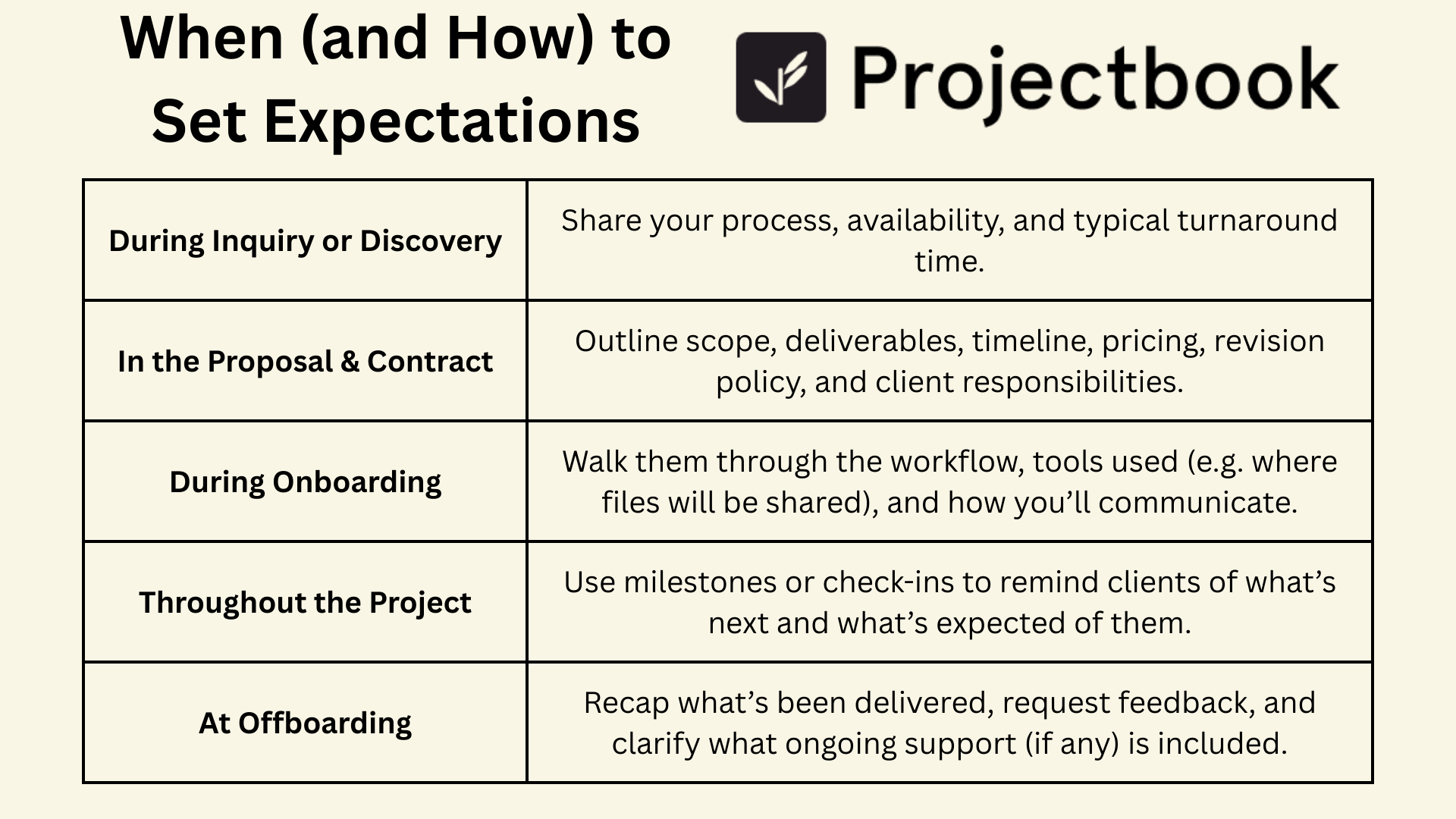
Here’s when to do it:
- During Inquiry or Discovery
- Share your process, availability, and typical turnaround time.
- In the Proposal & Contract
- Outline scope, deliverables, timeline, pricing, revision policy, and client responsibilities.
- During Onboarding
- Walk them through the workflow, tools used (e.g. where files will be shared), and how you’ll communicate.
- Throughout the Project
- Use milestones or check-ins to remind clients of what’s next and what’s expected of them.
- At Offboarding
- Recap what’s been delivered, request feedback, and clarify what ongoing support (if any) is included.
7 Communication Strategies That Keep Everyone on the Same Page
These simple strategies will help you manage expectations like a pro—before, during, and after every project.
1. Be Specific in Your Scope
Instead of saying:
“I’ll create a website.”
Say:
“I’ll design and develop a 5-page responsive Squarespace website, including a homepage, about, services, contact, and blog page.”
💡 Tip: Always list what’s included—and what’s not.
2. Use a Clear Timeline With Milestones
Break the project into phases and assign expected dates. This helps clients visualize progress and prevents “is it done yet?” messages.
“Here’s how the next 4 weeks will go:
Week 1: Kickoff + content collection
Week 2: First draft
Week 3: Feedback + revisions
Week 4: Final delivery + training”
3. Repeat Yourself (On Purpose)
Don’t assume your client read every word of your proposal. Reiterate key expectations verbally and in writing.
“Just a quick recap—your package includes 2 rounds of revisions. Any edits beyond that are billed at $75/hour.”
4. Ask Questions to Uncover Hidden Expectations
“What does success look like to you at the end of this project?”
“Have you worked with a freelancer before?”
“What communication style works best for you?”
This helps you prevent misalignment before it happens.
5. Set Boundaries With Professional Warmth
It’s possible to be both kind and firm. Use phrases like:
“To stay on track with our timeline, I’ll need all content by Friday.”
“My response time is typically within 1–2 business days.”
“Happy to add that! I’ll send over a quick scope update and quote.”
6. Use Templates and Checklists
Reduce room for miscommunication by using consistent materials across all clients:
- Onboarding email
- Scope of work template
- Revision policy
- Offboarding checklist
💡 Save these inside ProjectBook.co and reuse them with each client.
7. Document Everything
If it’s not documented, it’s easy to forget—or dispute. Use a centralized system to keep track of:
- Client requests
- Project updates
- Scope changes
- Feedback and approvals
💡 With ProjectBook.co, every note, file, and task stays tied to the project—so you can always look back.
How ProjectBook.co Helps You Manage Client Expectations with Ease
Let’s face it: juggling timelines, scope, feedback, and client communication manually gets messy—fast.
That’s why ProjectBook.co is designed to keep expectations visible and organized throughout the project.
Here’s how it helps:
✅ Scope of Work Saved Inside Each Project
So you never lose track of what was promised.
✅ Task Lists and Timelines
Clients and freelancers alike know what’s due, what’s done, and what’s next.
✅ Centralized Notes and Feedback
So your conversations and revisions don’t get buried in email threads.
✅ Reusable Templates for Proposals and Onboarding
So you’re consistent, clear, and efficient every time.
✅ Client Dashboard View
Everything lives in one calm, focused workspace—perfect for you, and professional for your clients.
Frequently Asked Questions (FAQ)
What if a client pushes back on a boundary or policy?
Stick to your process. Kindly remind them of what was outlined in the proposal or contract. Use calm, direct language:
“To keep the project on schedule, I’ll need to stick with the timeline we agreed on.”
How do I reset expectations mid-project?
Start with a reset conversation. Acknowledge the changes, revisit the scope, and present options for adjustments. Always follow up with documentation.
What’s the difference between setting and managing expectations?
Setting expectations happens at the beginning. Managing expectations means reinforcing and adjusting them as the project evolves.
Can ProjectBook.co help with client communication?
Yes! ProjectBook.co centralizes everything—tasks, timelines, files, feedback, and scope—so you always have the context you need to communicate clearly.
What if a client never reads the onboarding or proposal?
Repeat key points verbally during a kickoff call and summarize next steps in a follow-up email. Consistency across formats helps it stick.
Final Thoughts: Clear Expectations Create Better Projects
Clients don’t expect perfection—but they do expect communication.
When you set clear expectations, you:
- Build trust
- Reduce misunderstandings
- Deliver better results
- Feel more in control of your time and boundaries
Want a system that helps you manage scope, timelines, and communication from start to finish?
Try ProjectBook.co today and manage every client project with confidence, clarity, and fewer misunderstandings.
When a conversation produces an approval, capture the choice and its context with this client decision log template so the next person can understand what was agreed.
From ideas to a clearer week