What to Do When You’re Behind on Everything (Freelancer Edition)
At a glance
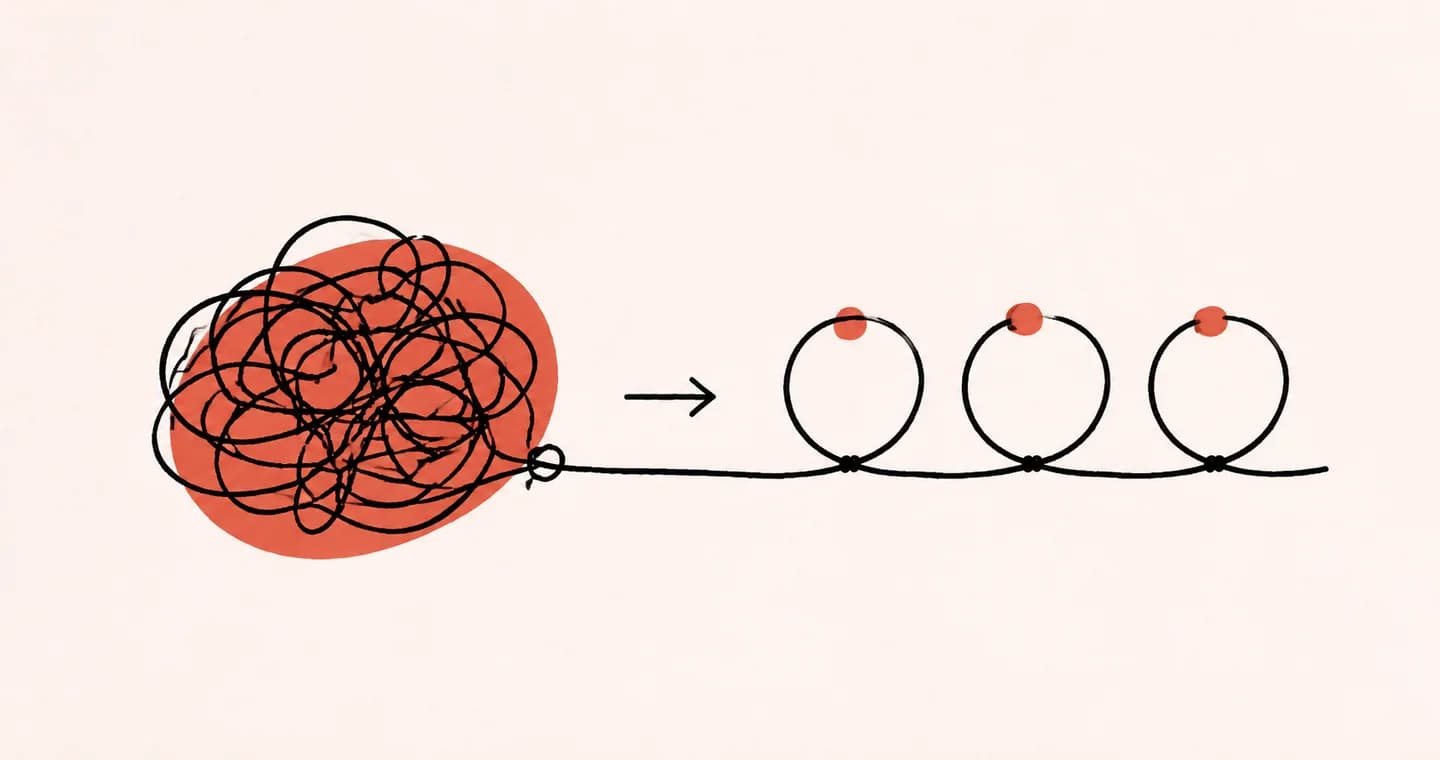
When everything is behind, rebuild a realistic view of your commitments before taking on more. Identify the most consequential deadlines, communicate changes and focus on the next action that restores progress.
1. The Freelancer’s Reality: Why It’s Normal to Fall Behind
Let’s start with the most important thing: falling behind is normal. It’s part of running a solo business. You don’t have a team buffering your schedule or stepping in when life hits. And life hits for everyone—whether it’s illness, burnout, unexpected client delays, or just too many overlapping projects.
If you’re behind on work right now, you’re not lazy or unprofessional. You’re human. What matters isn’t avoiding this entirely (because you won’t). It’s learning how to recover with grace—and with systems that help prevent a repeat.
2. The Cost of Staying Stuck in Overwhelm
The real risk isn’t falling behind. It’s staying stuck in a cycle of avoidance.
When freelancers feel buried, we often default to frantic activity (trying to do everything at once) or complete shutdown (procrastination, perfectionism, distraction). Both lead to more stress—and more delays.
This spiral can quietly damage client trust, tank your income, and chip away at your confidence. The sooner you interrupt the cycle and get back to a grounded, prioritized plan, the better for everyone involved.
3. First: Stop and Take Stock
Before you dive back into the work, pause.
Trying to “catch up” in reactive mode almost always leads to burnout. Instead, take stock of where things actually stand.
Go through every active project and make a simple list:
- What’s currently overdue?
- What’s coming due soon?
- What’s stuck waiting on someone else?
- What’s not as urgent as I’ve been telling myself?
Seeing it all on paper—or in a clean project view—immediately calms the mental chaos. You can’t fix what you can’t see.
4. Next: Identify What Truly Matters
Now that you can see the full picture, it’s time to prioritize.
Every project has a critical path: the tasks that truly move it forward. And every business has clients or deliverables that are higher impact than others.
Identify what’s truly urgent and important—not what’s simply loud. Ask yourself:
- What is blocking other work?
- Which clients are waiting for something right now?
- What task, if completed today, would provide the most relief or momentum?
You’re not aiming to “do everything.” You’re aiming to do the right things first.
5. Rebuild a Simple Plan You Can Actually Follow
Once you know what matters, rebuild your work plan—but be realistic.
This isn’t the time for an aspirational schedule packed with back-to-back tasks. That will only set you up to feel behind again.
Instead:
- Block focused time for the highest-priority tasks.
- Schedule the next few days with breathing room.
- Sequence your work so that each task builds momentum, not drains it.
Often, completing just one or two high-impact tasks will create space—and renew your energy to keep going.
6. Communicate Proactively With Clients
If you’re behind, it’s tempting to hide from your inbox. But silence creates more damage than a delay ever will.
Clients appreciate honesty and clarity. If something will be late, let them know before they ask. A short message explaining where things stand and how you’re adjusting your plan often restores trust immediately.
You don’t have to over-explain or apologize excessively. A tone of calm confidence—“Here’s what’s happening, here’s what I’m doing about it”—goes a long way.
When you do this, clients see you as a professional managing a temporary challenge, not someone who is unreliable or checked out.
7. How ProjectBook.co Helps You Recover and Stay on Track
One of the hardest parts of recovering from overwhelm is regaining a sense of control. You need a space where your priorities are clear and your project status is easy to see.
ProjectBook.co helps here in a few key ways:
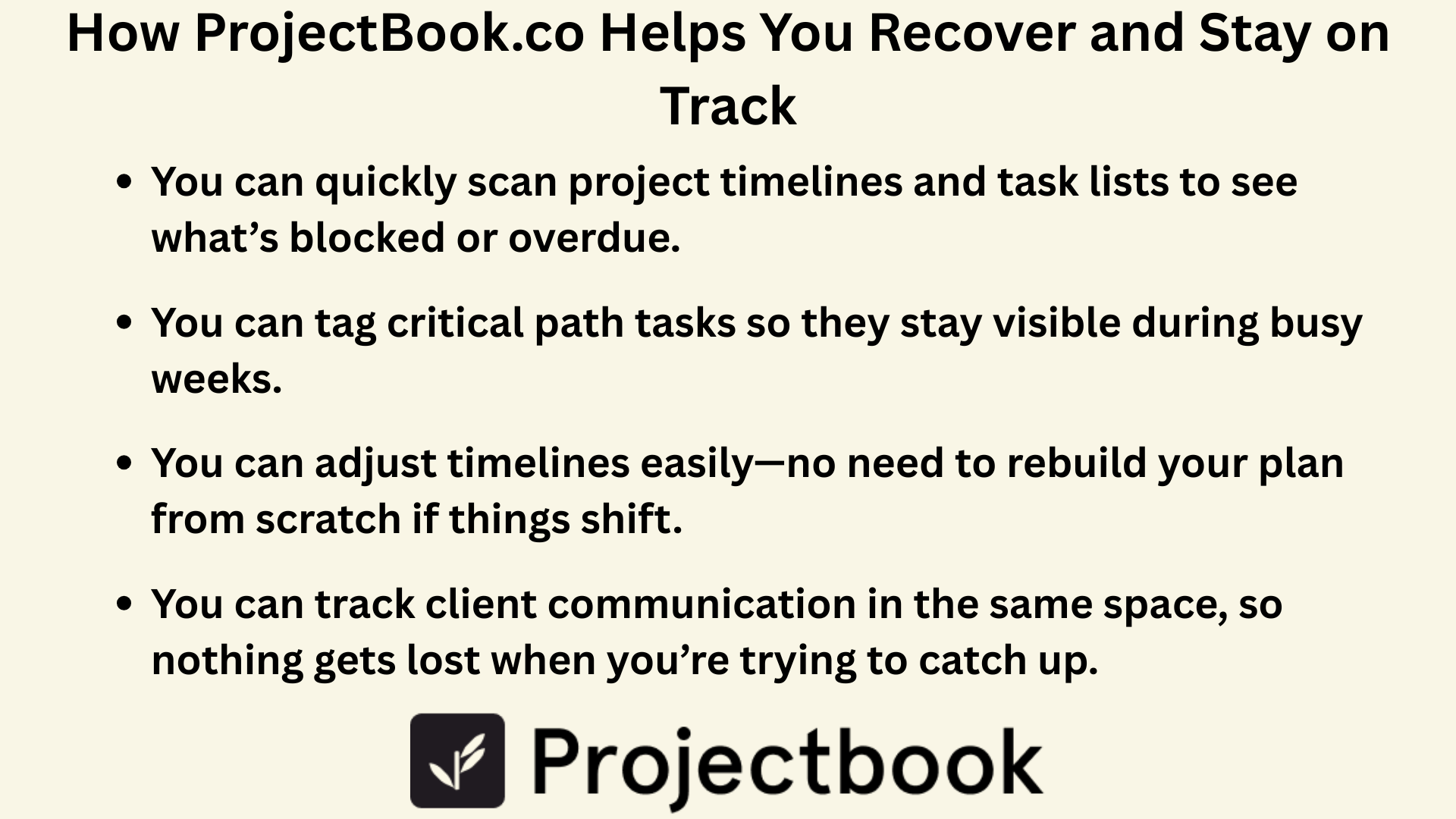
- You can quickly scan project timelines and task lists to see what’s blocked or overdue.
- You can tag critical path tasks so they stay visible during busy weeks.
- You can adjust timelines easily—no need to rebuild your plan from scratch if things shift.
- You can track client communication in the same space, so nothing gets lost when you’re trying to catch up.
The goal isn’t perfection. It’s a system that supports recovery and clarity when things get messy (because they always do sometimes). When your project workspace helps you see the truth of where things stand, it’s much easier to get back on track.
8. FAQ: Managing Freelance Work When You’re Behind
What should I do first when I realize I’m behind?
Take stock. Don’t jump straight into reactive work. Make a clear list of what’s overdue, what’s critical, and what’s flexible.
How do I balance catching up with ongoing new work?
Communicate. Let newer clients know what to expect, and give yourself permission to focus on the highest-leverage catch-up work first.
How do I avoid this happening again?
Build in more margin. Use phases, clearer timelines, and project visibility tools (like ProjectBook.co) to prevent invisible overload.
How can ProjectBook help with overwhelm?
By giving you a central place to see your real priorities, track what’s blocked, and adjust your plan as needed—all without the friction of juggling disconnected tools.
Final Word
Every freelancer falls behind sometimes. It’s part of doing complex work as a solo operator. What matters most is how you respond.
When you stop to assess, prioritize wisely, and communicate clearly, you regain trust and momentum faster than you think. And when you use tools that support that process—like ProjectBook.co—you create a stronger foundation that helps you navigate the next crunch with even more ease.
If you’re feeling behind today, breathe. You can rebuild a calm, clear path forward. And you’re already doing it—one good decision at a time.
From ideas to a clearer week